Six layers, one factory
Each layer feeds the next. A change in propulsion is tested against the avionics and the firmware before it reaches a customer.
Composite airframe
StructureWe lay up, cure and finish composite airframes in house. Weight, stiffness and repairability are set by us, not by a supplier's catalogue.
Propulsion
Motors, speed controllers, power electronicsPropulsion is the largest single cost block in a drone and the most imported. We design for local motors, controllers and battery packs from the start.
Avionics and datalink
Flight computer, radios, encrypted C2Flight hardware and radio links built and tested together, so what flies is what was qualified.
Autonomy firmware
Navigation and controlAutonomous waypoint flight, GPS-denied navigation and multi-aircraft coordination, written and owned by our own engineers.
Operator training
Limo SimA simulator and syllabus built around our own aircraft, so operators learn the platform they will fly. Certified pilot training runs through an approved training partner.
Mission software
Limo Mission SuitePlanning, tasking, monitoring and data output in one place, from a single sortie to a fleet.
Civil and defence, side by side
The campus plan has two lines on shared tooling. The civil line builds agricultural, mapping and inspection aircraft. The defence line runs in a separate, access-controlled cell.
Site, capacity and start date will be announced once the site is secured. We will not publish a capacity figure until the first production line has built to it.
| Civil line | Harvest, Surveyor-M, Voyager and Atlas-L aircraft |
|---|---|
| Defence line | Swift-I, Swift-E, Sentinel, Atlas-T and defence configurations, access controlled |
| Shared | Composite shop, motor and battery test, avionics lab, flight test field |
| Records | Serial-numbered build and test record for every aircraft |
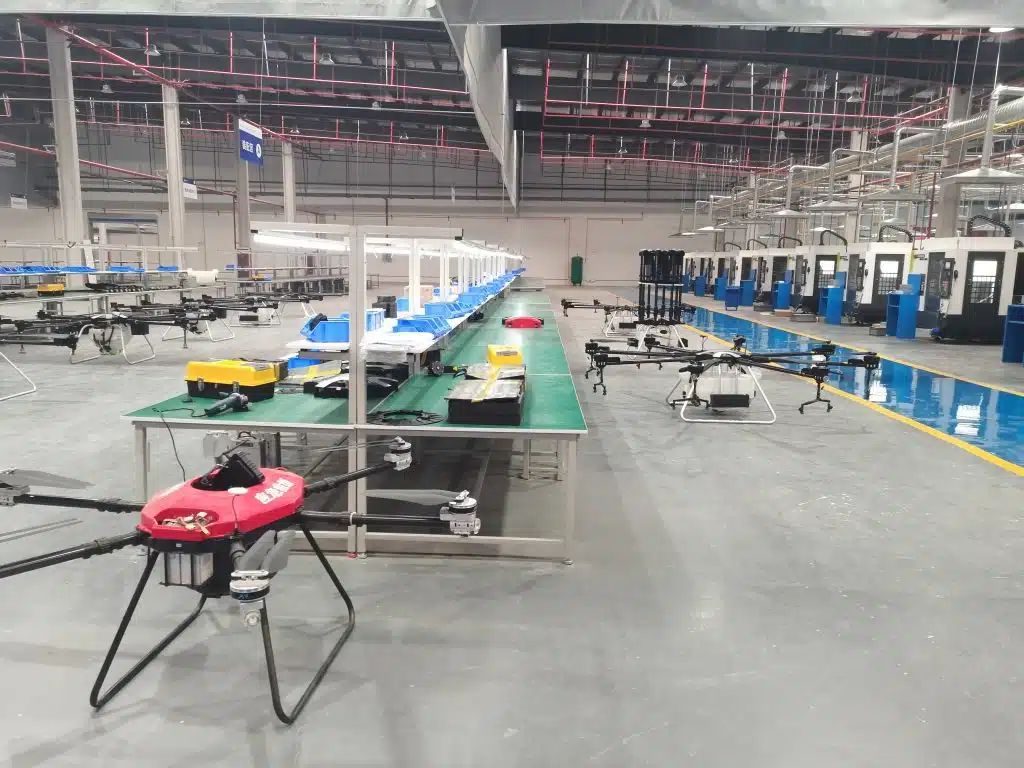
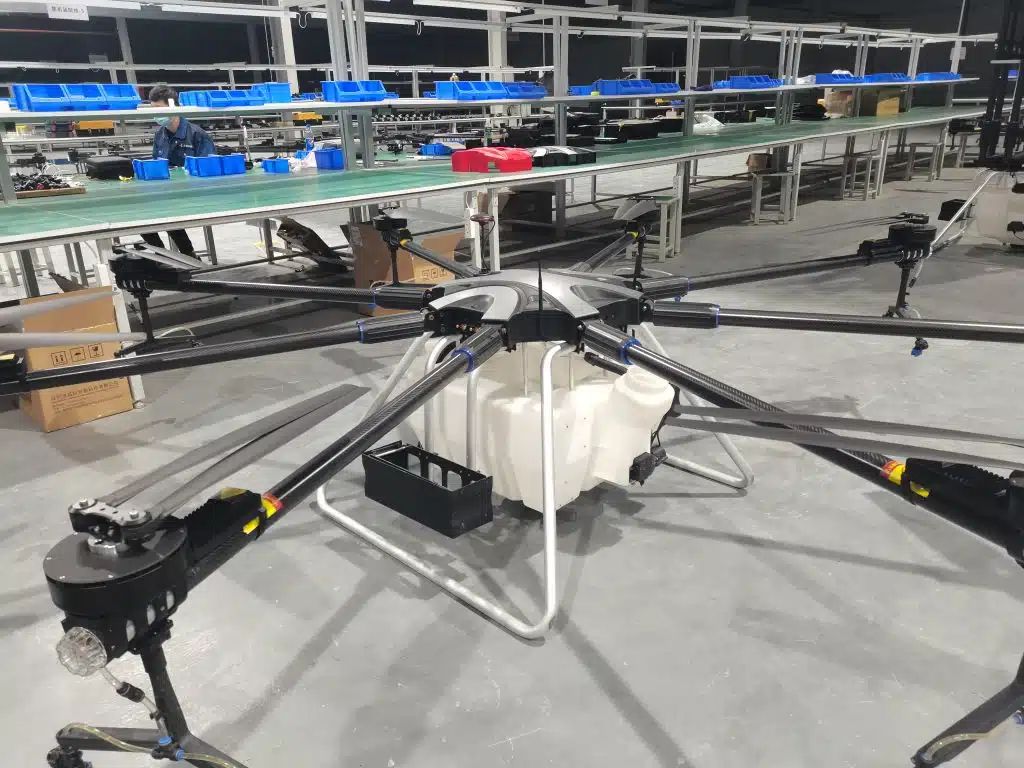
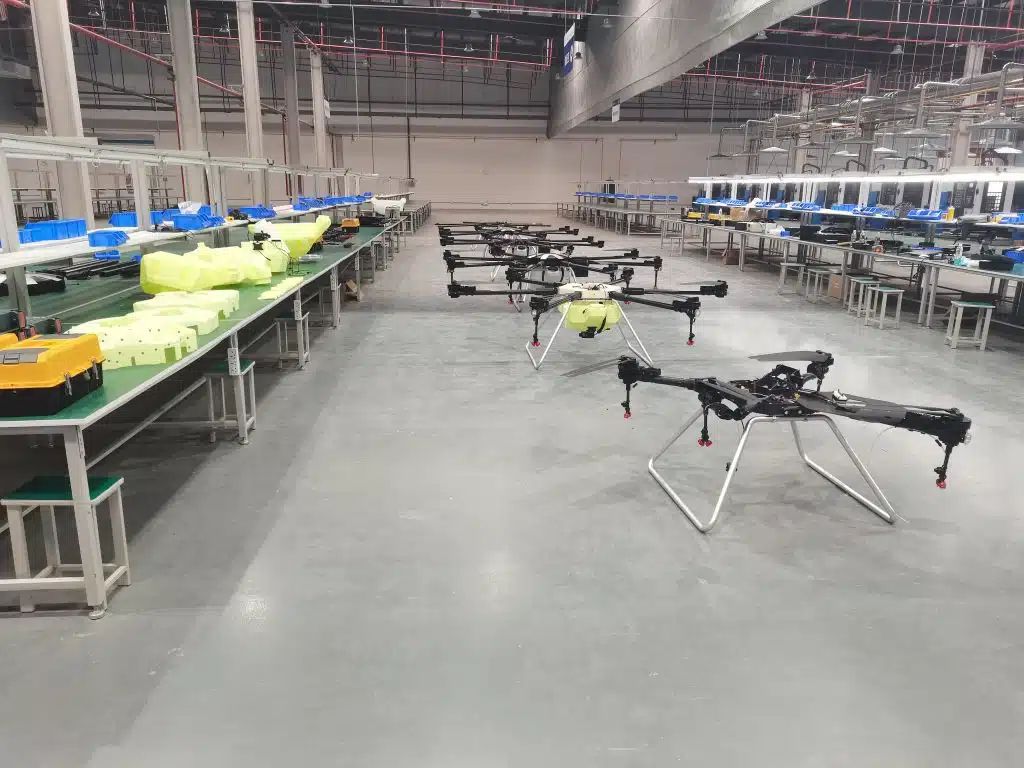
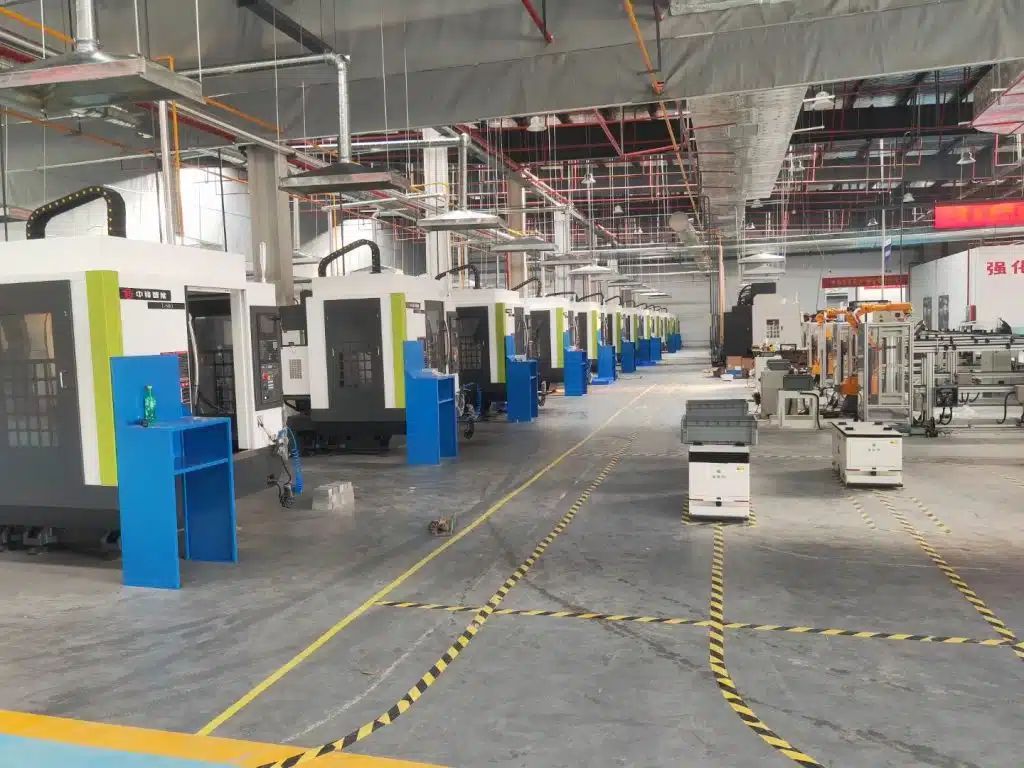
What a line looks like
Reference photographs of a drone assembly floor, to show the kind of facility we are planning. They are not images of a Limo Aerospace site.
Tested before it ships
Incoming
Parts inspected and logged against drawing before they reach the line.
In process
Layup, bonding and wiring checked at set points, not only at the end.
Flight acceptance
Every airframe flies an acceptance profile before release.
Field feedback
Fault and usage data flows back to design and the next batch.
Designing out the imports
Reported industry experience is that motors, sensors, flight-controller chips and batteries still come largely from China and Taiwan, and propulsion alone is cited at about 40% of drone cost. We design for local sources of the parts that matter most.
Propulsion
Motors, speed controllers and power electronics, including magnet supply risk.
Power
Battery packs and charging, qualified for Indian heat and dust.
Flight electronics
Flight computer boards and radios designed and tested in house, with chip sourcing from trusted suppliers.
Sources: Outlook Business, "India's Drone Dream Still Flies on Foreign Parts"; Mint, rare-earth magnet reporting, 2025 to 2026.
Certify first. Then scale.
The rules we are designing to, as reported. Confirm current status before relying on any item.
| Civil rules | Drone Rules, 2021 govern registration, airspace zones and operations through the Digital Sky platform. |
|---|---|
| Type certificate | The Drone Certification Scheme, 2022 sets the route to a DGCA type certificate. We plan one per airframe family. |
| Imports | Foreign-made drones were banned from import in February 2022. Components were not banned. Defence imports need DGFT approval. |
| Incentives | The first PLI scheme (₹120 crore) has ended. A ₹2,000 crore successor, aiming at 40% local parts by FY28, was reported in 2025. Final approval needs checking. |
| Defence | Defence supply follows government qualification and trial routes. No approval is claimed here. |
| Training | Certified pilot training must run through a DGCA-approved remote pilot training organisation. We will partner with one. |
Sources: Fiinews (PLI scheme, Drone Certification Scheme); Drishti IAS (import ban, Feb 2022); Inc42 and Entrepreneur India, citing Reuters (₹2,000 crore plan).